
Mobile-money payroll: paying every worker, banked or unbanked
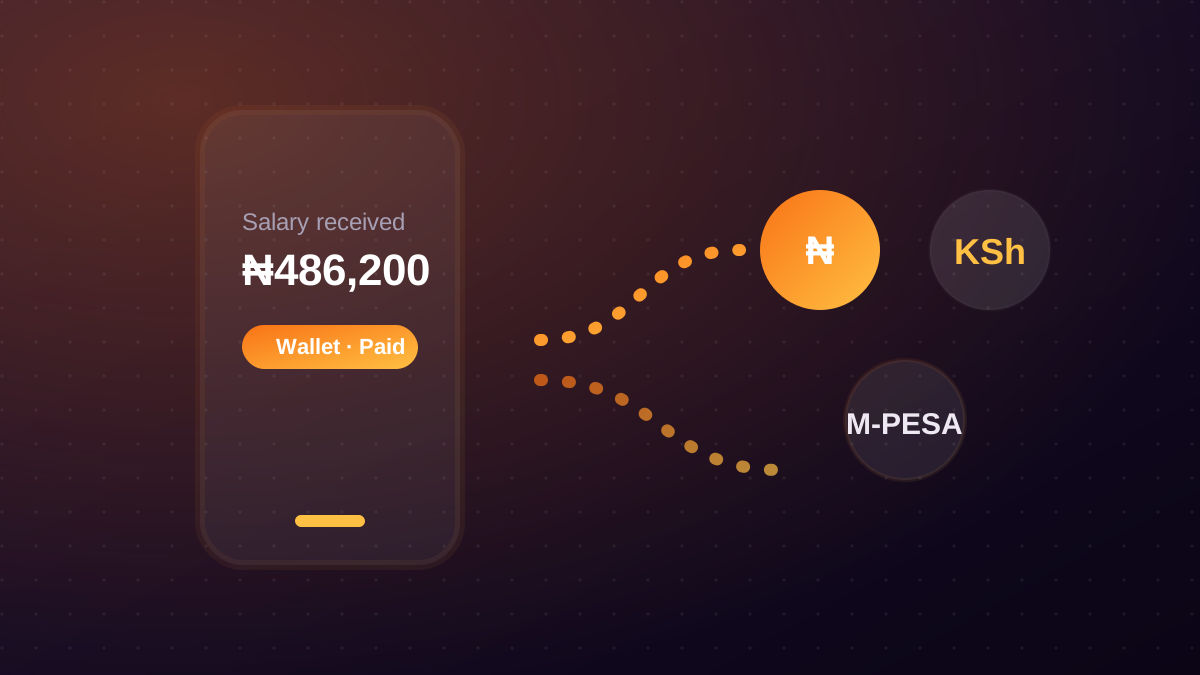
Somewhere on your payroll is a security guard, a field agent or a factory worker without a bank account. In much of Africa that's not an edge case. Mobile wallets are how a huge share of adults actually receive and spend money. If your payroll can only speak to banks, you're paying some of your people the hard way.
Why mobile money belongs in payroll
- Reach. Wallets like M-PESA work on any phone, anywhere with signal: no branch visit, no minimum balance, no paperwork queue.
- Speed. Wallet payouts land in seconds, not the two banking days a transfer can take across borders.
- Dignity. Cash payrolls mean queues, envelopes, and risk. Digital payout, to any destination the employee chooses, is safer for everyone.
What good looks like
- Employee choice. Each person picks their destination: bank, wallet, or a split. The choice lives on their profile, not in a spreadsheet.
- One run, many rails. Your payroll engine computes everyone's net pay once, then routes payments to the right rail automatically.
- Cross-border built in. Teams across Nigeria, Kenya and Ghana get paid in local currency at transparent rates, including fast regional corridors.
- Reconciliation without tears. Every payout, on every rail, lands in one report that matches the payroll run to the kobo.
The question is no longer "does the employee have a bank account?" It's "why does your payroll care?"
The compliance angle
Paying through wallets doesn't relax your obligations. PAYE, pension and levies apply the same. What changes is auditability: digital payouts create a clean trail that cash never will. Make sure every transfer is screened and every recipient verified.
Quick check: what is manual payroll actually costing your team? Get an instant estimate in your own numbers, free.
Open the savings calculator →How Xceed365HR does it
XceedPay pays to banks and mobile money natively, XceedPulse pays out taxes, pensions and benefits right after the run, and every payout reconciles automatically against the run. One payroll, every worker paid on time, banked or not.
See how Xceed365HR handles this for you
Your payroll, your compliance, your people: one platform, one free demo.
Keep reading

Nigeria payroll compliance in 2026: what HR leaders need to know
PAYE, PENCOM, NHF, NSITF, ITF, and what the new tax reforms mean for your payroll from January 2026.
What is agentic HR? How AI agents are quietly taking over HR busywork
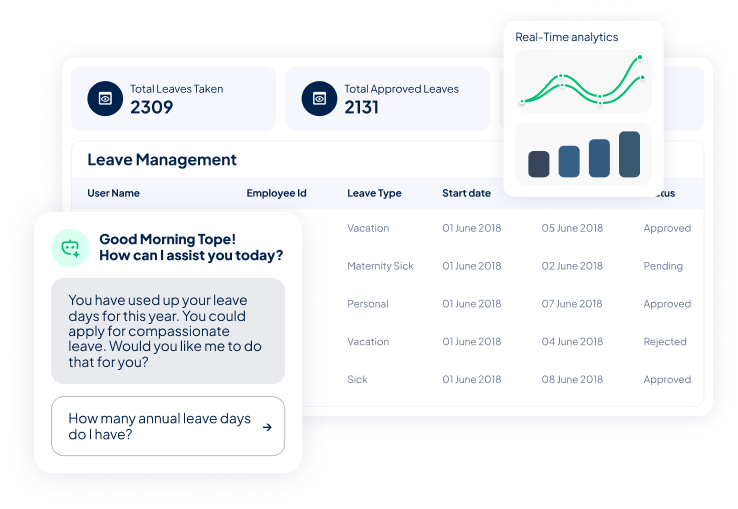
The difference between a chatbot that answers questions and an agent that finishes the job, and what it means for your team.
SHIF, NSSF and the housing levy: running compliant payroll in Kenya
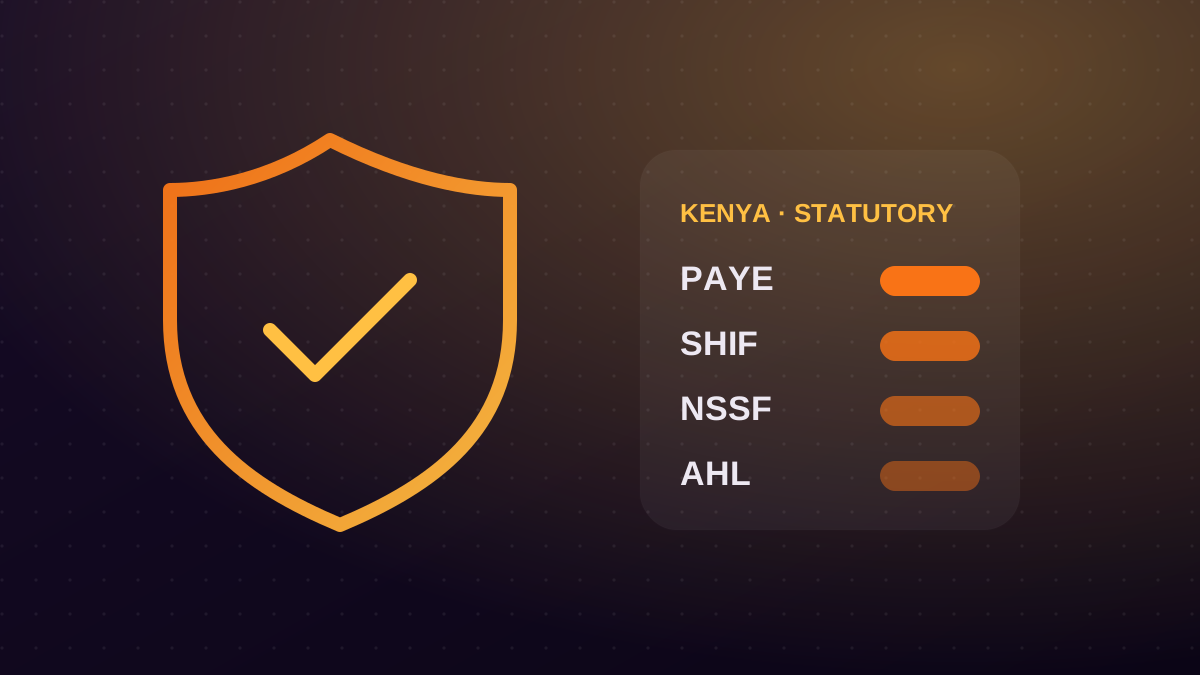
A practical guide to Kenya's statutory deductions: what to deduct, what to match, and when to remit.